

If There Is So Much Silver, Why Does It Feel So Hard to Find?
Every few years, the silver market sends confusing signals.
On one side, you hear that there are hundreds of millions of ounces stored in vaults around the world. On the other side, people who try to buy physical silver notice higher premiums, delays, and sometimes empty shelves.
So what is really going on?
The answer lies in a quiet but powerful difference — the gap between paper silver and physical silver.
Most silver trading today happens on screens. Futures contracts, exchange-traded funds, and derivatives change hands millions of times a day. This is paper silver. It represents ownership on paper, not metal in your hand.
Physical silver is different. It is the bars, coins, and industrial metal that must be mined, refined, transported, stored, and finally delivered. And that physical supply is not growing as fast as the world’s demand.
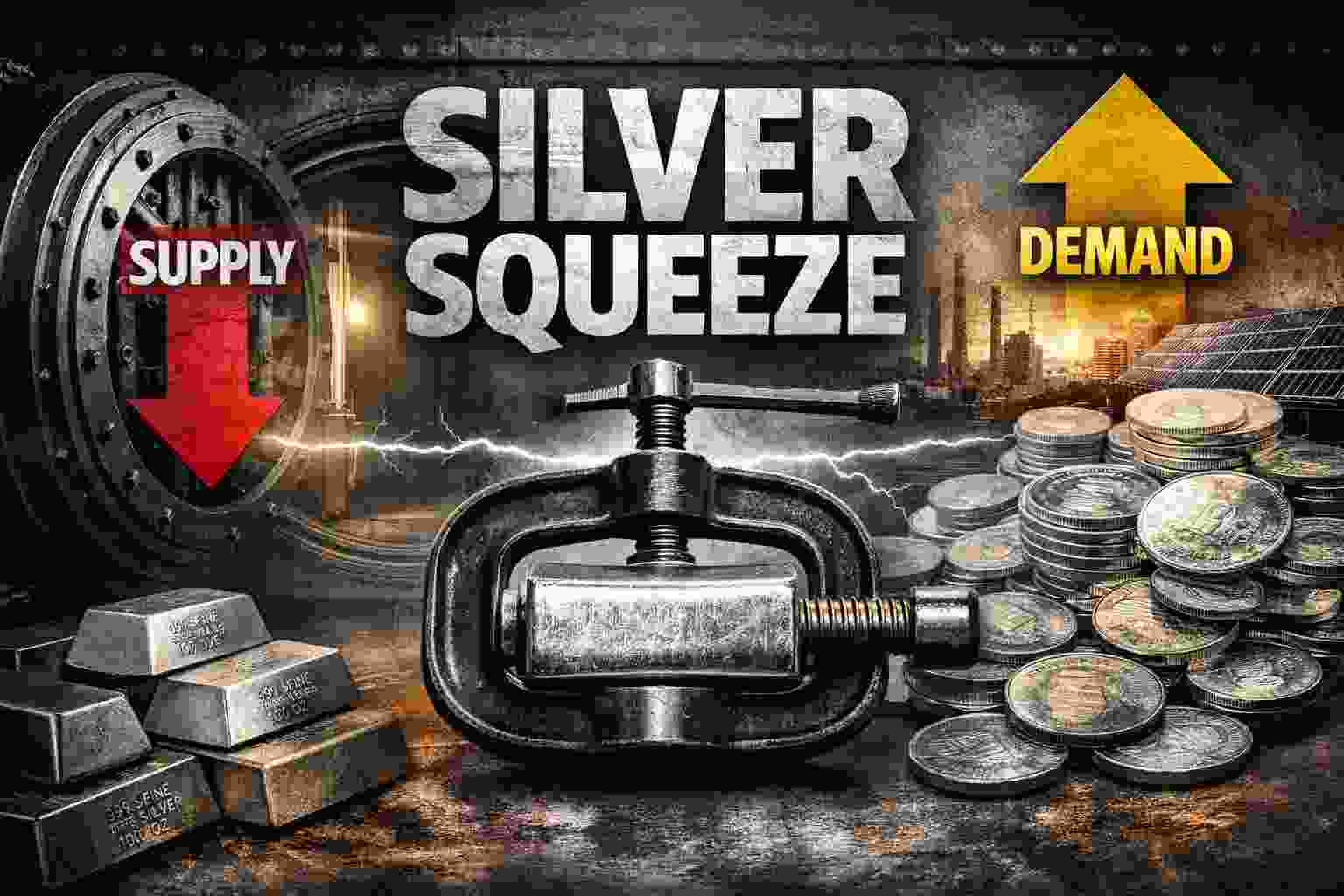
This is where the idea of a silver squeeze comes in.
So, What Exactly Is a Silver Squeeze?
A silver squeeze happens when too many people ask for real silver at the same time — and the system cannot deliver quickly enough.
On paper, there seems to be plenty. But when buyers demand physical delivery, they suddenly discover that much of the silver they see listed in vaults is not actually available. Some of it belongs to long-term owners, some is already promised to other contracts, and some is simply not registered for delivery.
When demand for real metal rises faster than supply, pressure builds. Short sellers rush to cover, vault inventories fall, and physical premiums rise. Prices may move sharply, sometimes in ways that feel sudden or even unnatural.
This is not because silver is “gone,” but because the available silver is far smaller than the market assumes.
Why Big Inventory Numbers Can Be Misleading
You may hear that vaults still hold massive amounts of silver. That sounds comforting, but it does not tell the full story.
Not all stored silver is ready to move. Only a small portion of it is classified as deliverable. The rest is locked away for private clients or held under contracts that cannot be touched.
So when people talk about “empty vaults,” they are not saying that silver has vanished. What they mean is that the part of silver that can be delivered right now is shrinking. That is the silver that truly matters during times of stress.
Demand Is Growing, But Supply Is Slow
Silver is no longer only a precious metal. It is now a critical industrial material. It is used in solar panels, electric vehicles, electronics, and medical devices. Every year, this industrial demand grows.
At the same time, more investors are turning to physical silver as a store of value. Coins, bars, and bullion are being bought faster than they can be replaced.
But silver mining cannot simply be turned on like a tap. Most silver is produced as a by-product of mining other metals, and new projects take years to come online. This creates a quiet but persistent supply gap.
Why Prices Can Drop Even When Silver Is in Demand
One confusing part of the silver market is that prices sometimes fall sharply even when physical demand is strong.
This happens because paper markets react to leverage, margin changes, forced liquidations, and institutional trading. When exchanges raise margin requirements or large players adjust their positions, prices can move suddenly — even if the physical market is tight.
In these moments, the paper price may fall, but the cost of buying real silver may stay high or even rise. This disconnect is one of the clearest signs of a stressed system.
Why Vault Inventory Truly Matters
Vaults are the last line between paper promises and physical reality.
When registered stocks fall while demand rises, it sends a quiet warning. It means the system is working harder to meet delivery requests. Even a small surge in demand can cause large movements when supply is thin.
That is why experienced investors watch vault inventories closely. They know that silver does not need to “run out” to cause trouble — it only needs to become scarce where it counts.
The Bigger Picture
The silver squeeze is not about panic or fear. It is about understanding how modern markets work.
We live in a system where paper claims far exceed physical metal. As long as most people stay in paper, everything looks normal. But when enough people want the real thing, the limits of the system become visible.
Silver is not disappearing — but the balance between supply and demand is becoming more fragile. And when that balance shifts, it tends to do so quietly at first, and then all at once.
Leave a Reply