

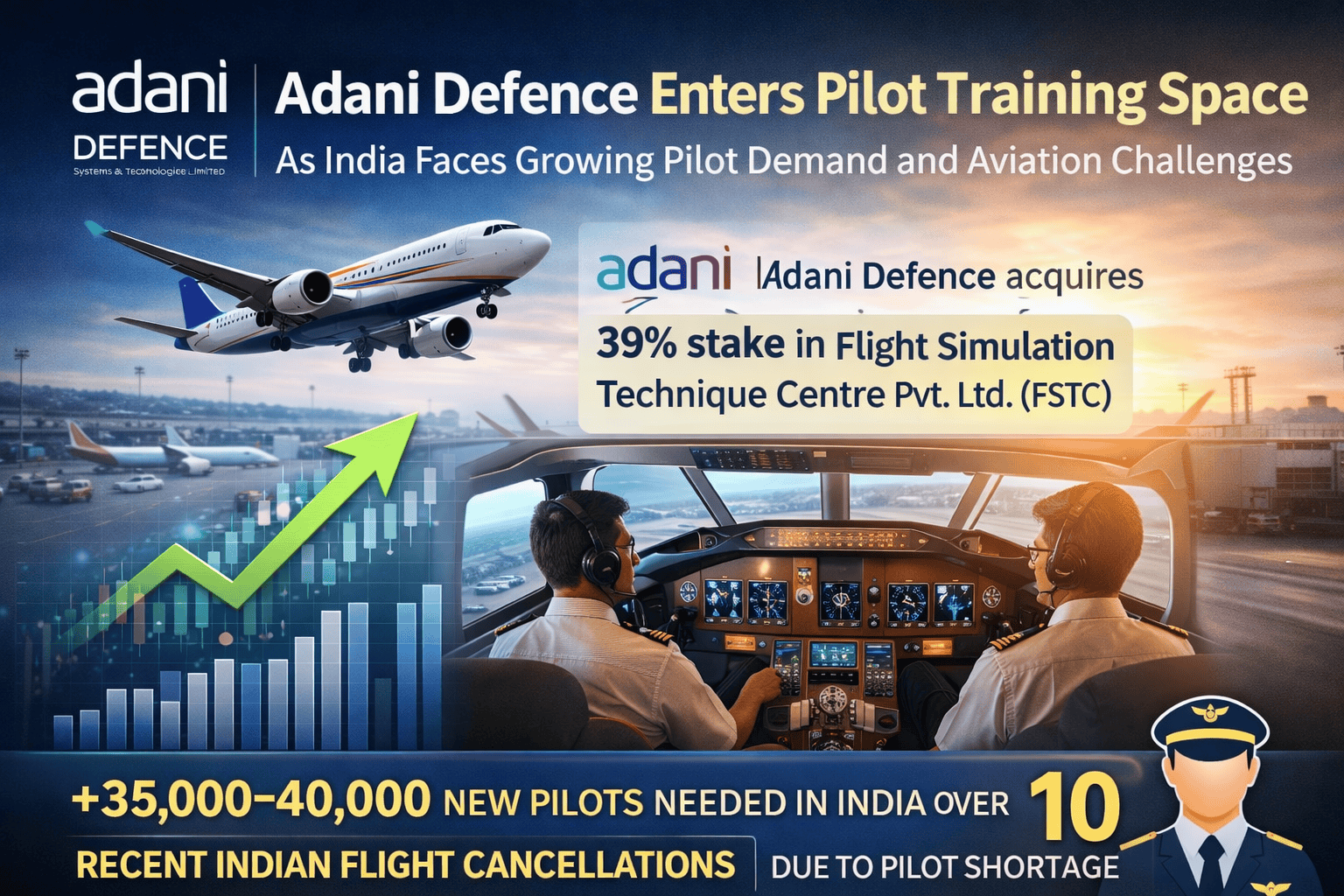
Adani Defence Systems and Technologies Limited (ADSTL), a wholly owned subsidiary of Adani Enterprises, has taken a strategic step into the aviation training ecosystem with its acquisition of a 39% effective stake in Flight Simulation Technique Centre Pvt. Limited (FSTC) on December 30, 2025. This move marks an important milestone for the group as India’s aviation sector undergoes rapid growth and structural challenges in pilot availability.
Strengthening Aviation Services Through Strategic Acquisition
FSTC is a well-established pilot training organisation that operates with approvals from both the Directorate General of Civil Aviation (DGCA) and the European Union Aviation Safety Agency (EASA). Founded in 2011, it provides comprehensive training to pilots using advanced simulators and aircraft. In the fiscal year 2024–25, FSTC reported an audited turnover of ₹195 crore, reflecting steady growth over recent years.
The acquisition is part of ADSTL’s broader strategy to expand its footprint in aviation services, particularly in flight training and simulation — areas that are increasingly critical as India’s airline industry grows. The deal, valued at an enterprise value of ₹820 crore, was executed in cash and is expected to complete the remaining stake acquisition by January 2026.
Why India Will Need Many More Pilots
India’s civil aviation sector is one of the fastest-growing in the world. With hundreds of aircraft on order and rising passenger traffic, the country is projected to face a significant pilot demand in the coming years.
- India could require about 25,000–30,000 additional pilots to operate the virtually 1,700 aircraft currently on order once they enter service. This estimate is based on standard crew needs per aircraft and recent government projections.
- Several industry forecasts suggest India may need 35,000–40,000 new pilots over the next decade, with thousands required even in the near term, due largely to fleet expansion and regional connectivity programmes.
- The current annual output of Commercial Pilot Licences (CPLs) in India is far lower than future demand, making training capacity a key bottleneck for sustainable growth.
In late 2025, India’s largest domestic airline faced widespread flight cancellations due to a shortage of available pilots and crew, exacerbated by new duty and rest-time regulations introduced by the DGCA to improve safety and reduce fatigue. These regulations require stricter limits on flying hours and extended rest periods, which contributed to operational disruption and passenger inconvenience across major airports.
How This Demand Helps a Defence-Linked Aviation Business
The growing need for pilots presents a unique opportunity for companies like ADSTL that are aligning defence, aviation services, and training infrastructure:
- High Growth Market for Pilot Training:
With demand far exceeding current training capacity, pilot schools and simulators are positioned to see sustained business demand. FSTC’s expertise in integrated training — combining simulators and real aircraft — places ADSTL in a strong position to capture this market. - Dual Civil-Defence Opportunities:
Defence aviation and civilian airline training often overlap in technology and simulation requirements. By investing in pilot training, a defence-linked entity can serve both sectors — smoothing revenue variability and building long-term partnerships with regulators and airlines. - Supporting Regulatory and Safety Goals:
The recent flight disruptions reveal a broader industry need to strengthen pilot preparation, crew management, and safety compliance. Organisations that can support robust training and simulation services help improve overall aviation reliability and safety. - Future Workforce Development:
As airlines and regulators push for expanded training capacity, companies involved in high-end aviation services may benefit from government incentives, partnerships, and preferred vendor status.
By addressing core challenges — from pilot shortages to safety training — Adani Defence’s move into flight training reflects both a business opportunity and a contribution toward building a more resilient India aviation ecosystem.
Leave a Reply